
Elections are more than casting ballots: they are a test of democratic institutions and stakeholder integrity.
When stakeholders—electoral bodies, parties, media, civil society, voters—perform effectively, the process gains legitimacy.
When they fail, trust erodes, participation drops, and social justice suffers.
For the Orient Foundation for Social Justice and Civic Education, assessing stakeholder performance means checking whether the process upholds rights and promotes inclusive participation.
Evaluation offers a way to:
- ensure civic education programmes are aligned with real-world needs.
- identify gaps in performance before, during and after elections;
- provide evidence to advocate reforms;
In many African contexts, weak stakeholder performance leads to contested results, low turnout or exclusion of vulnerable groups. interesjournals.org+1
By setting clear criteria and monitoring frameworks, organisations can move from reactive commentary to proactive engagement.
This blog post outlines how to identify stakeholders, define “performance”, choose indicators, apply civic-education lenses, and build a practical monitoring approach.
It is structured for practitioners who support election integrity and want actionable guidance.
Who are the Key Stakeholders in an Election?
2.1 Election Management Bodies
These are the institutions mandated to organise, manage, and validate elections. They may include national commissions, local offices, regulatory units. aceproject.org+1
Their responsibilities include: voter registration, polling logistics, counting and result aggregation, complaints and adjudication.
When assessing performance, consider how well they plan, execute, communicate and manage the process.
For civic-education actors, this stakeholder’s performance affects whether citizens understand their rights and can participate meaningfully.
2.2 Political Parties and Candidates
Political parties and independent candidates are central to elections—they present choices, mobilise voters, and campaign. interesjournals.org
Their performance matters in terms of fairness, access, internal democracy, transparency of funding, and conduct.
Evaluation should ask: Do parties treat supporters and opposition fairly? Are campaign messages accessible and truthful? Is there undue influence or intimidation?
Civic education programmes often aim to inform voters about party behaviour and candidate accountability.
2.3 Media and Civil Society Organisations
Media and civil society play oversight and education roles. They inform voters, monitor the process, expose malpractice. Organization of American States
Evaluation should focus on independence, reach, accuracy of reporting, and civic engagement activities.
For example: does media provide balanced coverage? Do CSOs provide voter education sessions or monitor polling stations?
A well-informed electorate depends on stakeholder performance in this category.
2.4 The Electorate (Voters)
Ultimately, voters are stakeholders too—they exercise the right to choose, they must trust and engage in the process. aceproject.org+1
Performance here means: voter registration rates, turnout, awareness of rights and process, inclusion of marginalised groups (youth, women, rural).
Civic-education efforts focus heavily on this group: equipping voters with knowledge, skills and attitude to participate.
When voters perform poorly—due to exclusion, misinformation, intimidation—the legitimacy of the election is vulnerable.
What Does “Performance” Mean for Each Stakeholder?
Performance refers to how well a stakeholder fulfils its mandate and responsibilities in a way that supports free, fair, inclusive elections.
It is measured not only by output (e.g., number of polling stations opened) but by quality, accessibility, transparency, accountability, and impact.
For the Orient Foundation, performance means alignment with social justice and civic education objectives: inclusive participation, rights protection, informed electorate.
Consider these dimensions:
- Effectiveness: Did the stakeholder achieve its key objectives (e.g., registration of all eligible voters)?
- Timeliness: Were tasks completed within required spans (e.g., timely publication of candidate lists)?
- Integrity: Was the stakeholder’s work impartial, transparent, free from undue influence?
- Inclusivity: Did the stakeholder reach disadvantaged groups, ensure equal access?
- Communication & Education: Did the stakeholder provide accurate and accessible information to citizens?
By defining “performance” in these terms, civic-education actors can move from general commentary to precise evaluation: “Did the party disclose funding?”, “Did the EMB publish accessible results breakdowns?”, “Were youth groups given information sessions?”
These evaluations then feed into accountability mechanisms and reform advocacy.
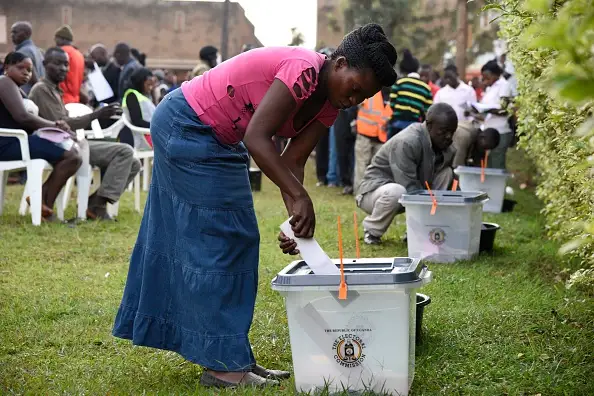
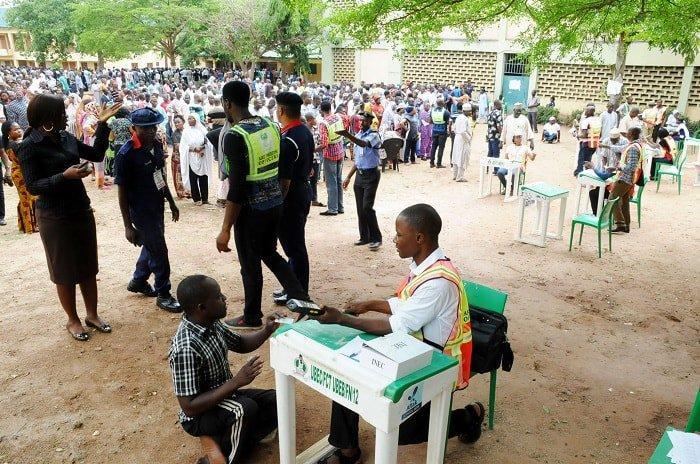
Criteria and Indicators for Evaluation
4.1 Transparency and Accountability
Indicators might include:
- Publication of budgets and expenditure by election-management bodies;
- Parties publishing candidate lists, funding sources;
- Media disclosures of ownership and funding;
- Complaint and redress mechanisms: number lodged, time resolved.
Transparency fosters trust; accountability ensures stakeholders are answerable for omissions or misconduct.
4.2 Inclusivity and Participation
Focus on whether stakeholders enable broad access and participation. Indicators:
- Voter registration registrations for women, youth, rural areas;
- Polling station accessibility for persons with disabilities;
- Outreach materials in local languages;
- Media coverage of marginalised groups and offline outreach by CSOs.
Inclusive performance ensures no group is systematically excluded, which strengthens the legitimacy of elections.
4.3 Legal and Institutional Compliance
Stakeholders must operate within legal frameworks and international standards. Indicators:
- Adherence to election law timelines;
- Implementation of transparent campaign-finance rules;
- Access for observers (domestic/international);
- Verification of identity, voter lists, chain of custody of ballots.
Poor compliance may undermine the entire process despite other good practices.
4.4 Communication, Education and Outreach
Key for civic education objectives. Indicators:
- Number and reach of voter‐education events or materials by CSOs;
- Public awareness levels (via surveys) of when, where, how to vote;
- Media coverage of rights and responsibilities of voters;
- Use of digital platforms and social media to inform.
Strong performance here reduces misinformation, enhances participation and fosters informed choices.
The Role of Civic Education in Assessment
Civic education is not merely a task but a lens through which stakeholder performance should be viewed.
It emphasises rights, responsibilities, agency of citizens, and the broader purpose of elections beyond outcome. OECD+1
The Orient Foundation can use civic-education programmes to both build capacity (for voters) and monitor stakeholder behaviour.
For example:
- Pre-election workshops: inform voters of their rights, then monitor if stakeholders respected those rights.
- Post-election debriefs: assess how well stakeholders communicated results and handled disputes.
By integrating civic education and performance evaluation, the Foundation strengthens both immediate election integrity and long-term democratic culture.
It also allows interventions where gaps are detected: e.g., if rural women remain unregistered, design targeted education and monitor the registration body’s response.
Practical Steps for the Orient Foundation’s Monitoring Framework
6.1 Planning and Baseline Setting
Begin by mapping stakeholders and their mandates.
Define performance criteria and indicators tailored to the local context.
Establish baseline data – e.g., registration rates last cycle, number of complaints lodged, media coverage metrics.
Set clear goals and a timeline aligned with the election calendar.
6.2 Data Collection and Monitoring Tools
Use a mix of quantitative and qualitative methods:
- Surveys of voter awareness and participation;
- Checklists for polling station observation;
- Media content analysis;
- Stakeholder interviews and focus-groups.
Ensure data capture tools consider gender, age, geographic diversity.
Train monitors and observers in how to use the tools and maintain neutrality.
6.3 Analysis, Reporting and Feedback Loops
Analyse data against your criteria and indicators.
Highlight strengths, weaknesses and trends.
Produce clear reports (executive summaries + detailed findings) for internal use, for stakeholders, for public advocacy.
Include recommendations and feedback loops: present findings to stakeholders, solicit responses, track follow-up actions.
6.4 Using Findings for Reform and Advocacy
Leverage the data to engage stakeholders:
- Hold round-tables with election bodies and political parties on findings;
- Use civic-education forums to communicate to voters what the findings mean;
- Partner with media and CSOs to publicise key findings and promote reform.
Ensure that evaluation is not just descriptive but leads to measurable improvements in next electoral cycle.
Challenges & Risks in Stakeholder Evaluation
Even the best frameworks face obstacles:
- Limited access to data: stakeholders may refuse to publish budgets, registration lists.
- Political resistance: parties or bodies may view evaluation as adversarial and obstruct.
- Resource constraints: monitoring across many polling stations, diverse regions requires funds and personnel.
- Bias and reliability: observers may carry preconceptions; data must be collected with methodological rigour.
- Time pressures: elections move quickly; without pre-planning you may miss key windows.
To mitigate these risks: build partnerships early, secure stakeholder buy-in, ensure transparency of your own methods, use sampling wisely, maintain independence and credibility.
The Orient Foundation should plan for contingency, schedule buffer time, and prioritise key stakeholders and indicators if full coverage is impossible.
Conclusion: Strengthening Election Stakeholder Performance for Democratic Outcomes
Evaluating stakeholder performance during elections is a vital step towards inclusive, transparent and credible electoral processes.
For the Orient Foundation for Social Justice and Civic Education, this means linking stakeholder roles to citizen rights and civic education goals.
By carefully defining stakeholders, clarifying what “performance” means, setting practical indicators, deploying a monitoring framework, and integrating civic education throughout—you build a tool for reform and accountability.
Election integrity is not a once-off event but a process of continuous improvement.
When stakeholders perform well, citizens engage, trust grows, and democracy deepens.
This work is both technical and value-based: the metrics matter, but so do the rights and participation of every voter.
Use this guide to shape your next monitoring cycle, inform your civic-education activities and help hold stakeholders to the standards that democracy demands.
